A Civil Rights Lawyer Perspective
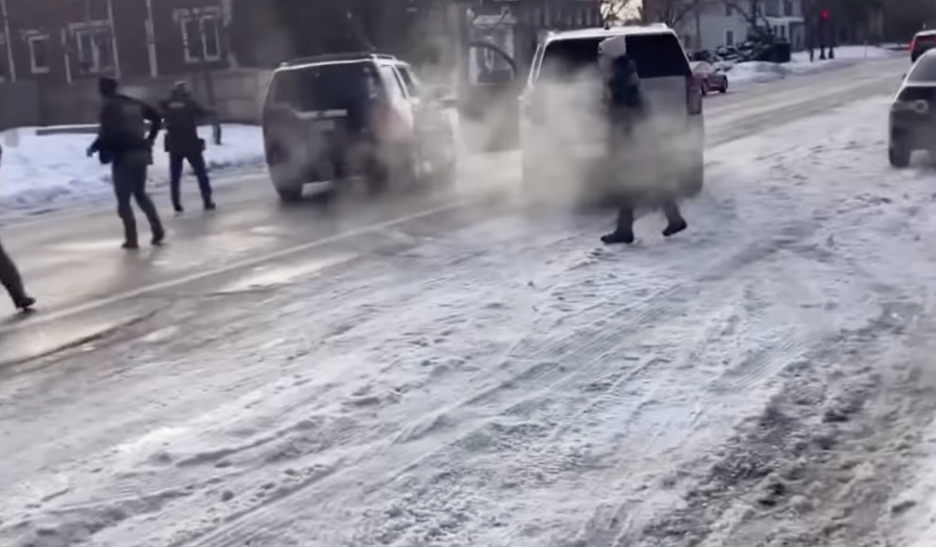
ICE officer Jonathan Ross shoots and kills Nicole Good
ICE shoots and kills Nicole Renee Good
I’ve worked enough police shooting cases to know at a glance whether something “smells.” And what happened on January 7, 2026 reeks. When ICE agent Jonathan Ross drew his service weapon and shot multiple times into Renee Nicole Good’s vehicle, his decision to use deadly force was likely, and in my professional opinion, both unjustified and unlawful.
I’ve sued many police departments and officers, and I can tell you that some officers—and some law enforcement departments—are different. And not in a good way. Many patrol officers have never even drawn a service weapon. Most have never fired a shot in the line of duty. The different is not “luck” or “different beats.” The difference is the culture that officer is surrounded by and the culture they internalize.
When we allow law enforcement badges and weapons and power, we give them trust that they will use that power in a lawful manner—and to enforce the law within the confines of the constitution. Every single time an officer draws their firearm, the weight of our constitution should guide them. Every single time an officer kills someone—whether justified or not—they deprive someone of their constitutional rights to life, liberty, and a trial by a jury of their peers.
The Fourth Amendment provides all of us the right “to be secure in their persons…against unreasonable…seizures” and includes the right to be free from excessive force by the government. The “reasonableness” of a particular use of force is judged from the perspective of a reasonable officer on the scene, not 20/20 hindsight. It is a standard of the moment as police officers are often forced to make split-second judgments in tense, uncertain, and rapidly evolving circumstances.
Supreme Court case Graham v. Connor tells us the types of facts and circumstances a court consider when examining whether an officer’s conduct was reasonable: 1) severity of the crime at issue; (2) whether the suspect poses an immediate threat to the safety of the officers or others; and (3) whether he is actively resisting arrest or attempting to evade arrest by flight. Other factors include the availability of less intrusive force [and] whether proper warnings were given. Reasonableness “depends on not only when a seizure is made, but also how it is carried out.
“Determining whether the force used to effect a particular seizure is ‘reasonable’ under the Fourth Amendment” requires a careful balancing of the nature and quality of the intrusion on the individual’s Fourth Amendment interest against the countervailing governmental interest at stake. “The parties’ “relative culpability” i.e., which party created the dangerous situation and which party is more innocent, may also be considered.”
The right question is “whether the totality of the circumstances justified a particular sort of search or seizure.”
Nicole Renee Good was not under arrest. She had not committed a violent crime. She was given no warnings about any officer’s intent to use deadly force. She was given unclear and conflicting instructions. She was unarmed. And it appears the officer(s) stepped into the space of her vehicle, i.e. into the zone of danger. Shooting her was not the answer.
1 U.S. Const. amend. IV.
2 Graham v. Connor, 490 U.S. 386.need full cite.
3 Staats v. Brown, 139 Wn.2d 757, 774, 991 P.2d 615 (2000), as amended (Jan. 24, 2000).
4 See Bryan v. MacPherson, 630 F.3d 805, 831; Deorle v. Rutherford, 272 F.3d 1272, 1282–83 (9th Cir. 2001)
5 Tennessee v. Garner, 471 U.S. 1, 8–9, 105 S. Ct. 1694; Terry v. Ohio, 392 U.S. 1, 28–29, 88 S. Ct. 1868.
6 Id. at 396.
7 Espinosa v. City & Cnty. of San Francisco, 598 F.3d 528, 537 (9th Cir. 2010); Scott v. Harris, 550 U.S. 372, 383, 127 S. Ct. 1769, 1778, 167 L. Ed. 2d 686 (2007)
8 Garner, 471 U.S. at 8-9. See also Blanford v. Sacramento Cnty., 406 F.3d 1110, 1115 (9th Cir. 2005).
